What is chemical characterisation of Medical Devices?
Chemical Characterization of Medical Devices is a critical part of ensuring product safety and regulatory compliance. Through this analytical process, we identify and quantify all chemical substances present in a device—including raw materials, additives, degradation products, extractables, and potential contaminants. At Applus+ Laboratories, we perform comprehensive chemical characterization for medical devices to help manufacturers understand how their materials behave throughout manufacturing, sterilization, storage, and actual use.
Why chemical characterization of Medical Devices is important?
Chemical characterization plays a fundamental role in patient safety and regulatory approval. By detecting unwanted chemicals, confirming material purity, and evaluating chemical stability over time, we help ensure devices remain safe throughout their intended lifespan. This process supports compliance with global standards, minimizes toxicological risks, and provides manufacturers with the data required for FDA and MDR submissions. Robust chemical characterization medical device analysis is essential for biocompatibility assessments and for controlling quality at every step of production.
- Regulators expect chemistry first. ISO 10993‑1 and 10993‑18 place chemical information upfront in the biological evaluation; FDA’s guidance reinforces this shift.
- E&L de‑risks safety and obsolescence. Extractables/leachables studies identify volatile, semi‑volatile, and non‑volatile compounds that can migrate under worst‑case or clinical use.
- MDR raises the bar on substances of concern (CMR, etc.). EU MDR heightens focus on chemical characterization and hazardous substances.
- PFAS scrutiny is intensifying in Europe. The EU’s updated PFAS restriction proposal under REACH is progressing, with sector‑specific implications for MedTech.
Our chemical characterisation services

Chemical Analysis
- Polymer molecular weight
- Polymer nature confirmation
- Endocrin disruptor (Bisphenol A, phthalates...)
- Chemical dosage
- Polymerization rate
- Chemical analysis of surface (MEB/EDS)
- Migration tests and release testing
- Unknown material identification
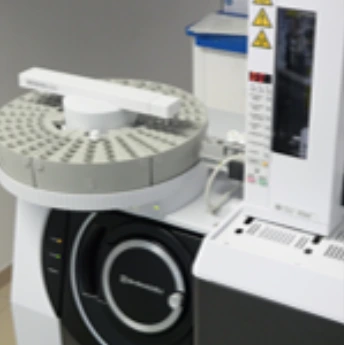
Chromatography & Spectrometry
- Impact of process
- Additives and adjuvants
- Residual solvent
- Residual monomers
- Material purity
- ICP Testing
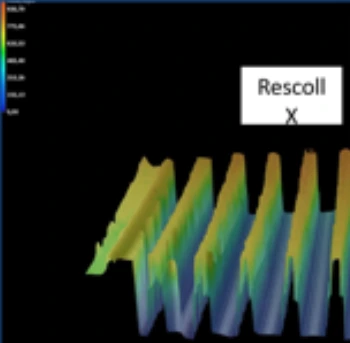
Surface Analysis
- Surface morphology
- Surface topography
- Roughness assessment
- Particle size distribution
- Dimensional measurement
- Wettability and hydrophilicity
- Adhesion tests & tribology
Thermal Analysis
- Glass transition, melting point
- Use temperature range
- Crystallinity
- Water content
- Ash content
- Modulus under dynamic stress
Material identification and reverse engineering
We identify the chemical nature of polymers, metals, ceramics, coatings, and composites used in medical devices. Reverse engineering helps determine material origin, purity, structural composition, and potential deviations from specifications. This process supports troubleshooting, design improvements, and competitive benchmarking.
Evaluation of leachables and extractables
Our team evaluates extractables (substances that can be released under exaggerated conditions) and leachables (substances released during actual use). Using advanced analytical techniques, we identify VOCs, SVOCs, NVOCs, additives, fillers, monomers, plasticizers, PFAS, endocrine disruptors, and other potential chemical risks. These studies are essential for assessing patient exposure and biocompatibility.
Residue analysis and sterilization residuals
We test for process residues such as solvents, monomers, hydrogen peroxide, cleaning agents, and contaminants introduced during manufacturing or sterilization. These analyses ensure that residual levels remain within acceptable limits and do not compromise device safety or performance
Spectrometry and chromatography characterisation for quality control
Chemical characterisation consists of identifying the presence of unexpected and unwanted compounds as well as verifying the quality of a material that might have developed during material reception, manufacturing, cleaning, or sterilisation. At Applus+ Laboratories, we offer the following routine analyses:
- Polymer chemical identification by FTIR
- Gas and liquid chromatography (HPLC, LC-MS, GC-MS Pyro-GC-MS): We identify and quantify the presence of SVOCs, VOCs, and NVOCs, such as cleaning agents, additives, fillers, and polymers. The presence of endocrine disruptor, residual solvent or monomed, chemical chemical of concern, PFAS and other additives that could bring safety issue
- Elemental Analysis and Metal Traces: We utilise ICP-OES spectrometry to measure and remove elemental impurities in medical devices.
- Polymer molecular weight by SEC: We perform size exclusion chromatography to provide the molecular weight distribution of polymers, which influences their mechanical and physical properties, affecting the device's performance and durability.
Physico-Chemical analysis
Material characterisation involves identifying any changes in the intrinsic properties of materials associated with manufacturing, cleaning, and/or sterilisation. These analyses can also be performed to qualify the material after manufacturing. We offer the following analyses:
- Water Content: Knowing the amount of water is important to evaluate the initial state of the material and a potential change in properties.
- Viscosity measurement using Brookfield, rheometer or gel timer apparatus
- Residual Hydrogen Peroxide
We employ spectrophotometry and titration to ensure safe levels of residual hydrogen peroxide. - Chemical dosage
- Density
- Ash content
- Volatile matter content
Surface analysis
These analyses are coupled with a comprehensive assessment of the surface state, including topography, wettability, roughness, and wear resistance. These tests allow verification of the quality of the interface and adhesion between coatings and medical devices (to be linked with material and coating sheet).
- Particle Size Characterisation: We use diffraction, laser granulometry, and high resolution microscopy to identify particle sizes to control the release rate of coatings on joint implants and the presence of contaminants in medical devices.
- SEM Microscopy with Elemental Analysis: We employ Scanning Electron Microscopy (SEM) which provides high resolution images of the surface morphology of medical device coatings and presence of particles on the surface.This is coupled with elemental analysis that provides the element composition of the structure.
Thermomechanical properties with DSC and DMA
Differential scanning calorimetry (DSC) measures the glass transition temperature and melting properties of polymers, which can be useful for controlling polymer batches, ensuring that sterilisation does not affect the crystallinity of the medical device surface, and controlling the polymerisation process as well as measuring the extent of cure of thermoset resins.
Dynamic Mechanical Analysis (DMA) evaluates mechanical stress under cyclic conditions or over a range of temperature to bring dynamic mechanical assessment and visco elastic behavior of a material.
Analytical chemistry for safer Medical Devices
We deliver decision‑ready analytics for regulated medical devices: chemical characterization, extractables & leachables , materials & surface analysis, and failure and non conformities investigation.
Chemical characterization
We determine the chemical identity, purity, and composition of materials and coatings. Through reverse engineering, we analyze design and material choices to support troubleshooting, improvement, or product benchmarking. We can insure identification and quantification of specific product and/or chemical composition according to the customer needs:
Routine analytics & supplier qualification
- Incoming raw material control, QC release, supplier screening with fit‑for‑purpose specificationss and methods.
Failure analysis & Troubleshooting
- Root‑cause on non‑conformities: degradation/aging, process drift, foreign particles, organic or inorganic contamination , mechanical/tribological issues.
- Reverse engineering & benchmarking of materials/coatings to inform redesign or supplier changes.
Change control & obsolescence (incl. PFAS/REACH)
- Comparability studies for formulation/process changes.
- Targeted screening for additive, monomers, plasticizers and substances of concern (REACH, CMR, endocrine disruptors, PFAS) to anticipate obsolescence and plan transitions.
Residue and cleanliness validation
- Extracttibles and leachables: Our extractables and leachables studies identify volatile, semivolatile, and nonvolatile compounds that may migrate from device materials.
- Cleaning Residue: Residues that can remain after manufacturing or sterilization, including solvents, monomers, or cleaning chemicals, ensuring compliance with safe limit.
Material and surface characterization
- Polymer ID & MW, crystallinity (DSC), melting point FTIR, SEC, GC/LC‑MS, ICP‑OES/MS, rheology
- Surface chemistry & morphology: SEM/EDS, roughness, wettability, adhesion/tribology, thickness, wear resistance. Correlate surface/state to performance, adhesion, and degradation.
Analytical techniques for Medical Device characterization
GC‑MS and LC‑MS analysis
We use GC‑MS, LC‑MS, Pyro‑GC‑MS, and UPLC‑MS QTof to identify VOCs, SVOCs, NVOCs, additives, monomers, processing aids, and impurities. These techniques support extractables/leachables studies, contamination analysis, and polymer chemistry identification.
FTIR analysis for polymers
FTIR spectroscopy provides rapid polymer identification, detects structural changes, and confirms chemical signatures. It is essential for quality control, contamination detection, and verifying incoming material batches.
Particle size testing
We perform diffraction, dynamic light scattering, and microscopy‑based particle size measurement to control coating release rates, evaluate implant wear debris, and detect contamination.
ICP Testing
ICP‑OES and ICP‑MS are used to quantify metal ions, elemental impurities, and trace contaminants. These tests ensure compliance with toxicological limits and assess degradation from metallic or ceramic components.
Benefits of Chemical Characterisation for Medical Devices
Material and chemical characterisation, along with being an essential part of our batch testing service, also has a lot of advantages for both ensuring patient safety and for maintaining compliance to medical device related standards. These benefits include this following:
- Performance and Reliability: Assessing the properties of your product can ensure that the materials used, and the design are reliable and will perform as it should in the range of different stress scenarios it will undergo.
- Patient Safety: Undergoing material and chemical characterisation reduces the adverse effects that patients might experience from the materials coming into contact with bodily fluids or tissues. It greatly reduces the risk of toxicity from harmful materials to maintain the product as safe as possible.
- Regulatory Compliance and Market Access: Material and chemical characterisation ensures that you follow the stringent standards put in place for medical devices. This regulatory compliance allows you to boost consumer trust knowing that your product has been fully tested.
- Risk Mitigation and Management: Material and chemical characterisation can assess potential risks and give advice on design changes in order to properly mitigate these risks. This has a great benefit to patient safety as well as consumer confidence.
- Market Access: Complying with the relevant standards when it comes to medical devices means boosting your market access to a global scale. With the right certifications, you’re more likely to operate in more countries.
Regulatory Compliance and Standards for Medical Devices Chemical Characterization and Specifc Molecules analysis
Our chemical characterization services support compliance with ISO 10993 (especially ISO 10993-17 and ISO 10993-18), FDA expectations for extractables/leachables, and EU MDR requirements.
These evaluations ensure that all materials and chemical constituents used in medical devices are safe, stable, and properly documented for regulatory review. Testing aligns with global guidelines for toxicological risk assessment, degradation profiling, and contamination control.
We generate complete chemical data packages suitable for toxicological risk evaluations and biological safety compliance. We complete standard E&L by deep chemical analysis on specific molecules to limit toxicological risk.
Why Choose Applus+ Laboratories for Chemical Characterisation?
Choosing Applus+ Laboratories for your material and chemical characterisation means partnering with a leader in medical device testing solutions. We provide high-quality, ASTM and ISO-compliant testing services that ensure the accuracy and reliability of your medical devices. We offer:

With a presence in multiple countries, we can deliver our testing services to customers around the world, ensuring you have access to the best medical device testing no matter where you are.
Let Applus+ Laboratories be your trusted partner for all your medical device testing needs. We can support your projects with our high-quality services and expert guidance.